The Great Migration is the largest movement of land animals on earth: more than 1.5 million wildebeest, joined by hundreds of thousands of zebra and gazelle, following the rains in a year-round loop between Tanzania’s Serengeti and Kenya’s Maasai Mara. In Kenya, the best time to see it is from July to October, with dramatic Mara River crossings usually most frequent in August and September.
This guide explains when the herds arrive, where to watch the river crossings, and how to plan a Great Migration safari that puts you in the right place at the right time.
What is the Great Migration?
The migration is driven by grass and rain. The herds spend the early part of the year in the southern Serengeti, where most wildebeest calves are born within a few weeks of each other around January and February. As the plains dry out, the animals move north and west in search of fresh grazing, reaching the Maasai Mara in Kenya around July. When the short rains return to the south in October and November, they turn back towards Tanzania, and the cycle begins again.
Along the way, the herds attract lions, leopards, cheetahs, hyenas and the huge Nile crocodiles that wait in the Mara and Talek rivers. It is one of the most intense wildlife spectacles anywhere in the world.
When does the Great Migration reach the Maasai Mara?
- Late June to July: the first herds cross the border from the northern Serengeti into the Mara. Numbers build quickly through July.
- August to September: the peak months. The herds are spread across the Mara, and river crossings can happen several times a day.
- October: the herds start drifting back south. Crossings continue, often with fewer vehicles watching.
- November: most of the herds have returned to Tanzania, though resident wildlife remains excellent.
Nature does not keep a strict calendar. Rainfall changes the timing from year to year, which is why it helps to have guides who are in the Mara every week and know where the herds are gathering.
Mara River crossings: what to expect
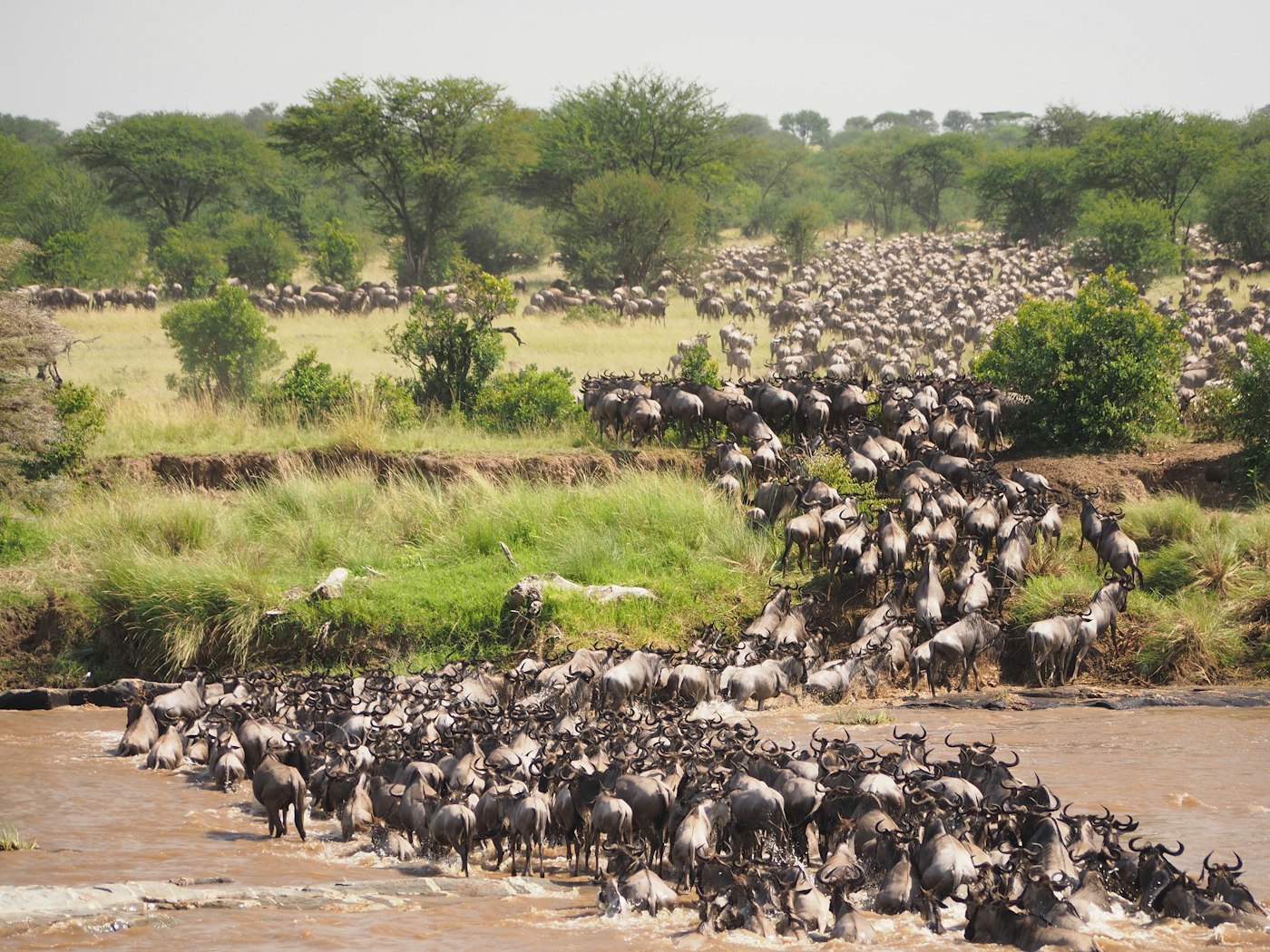
A river crossing is the moment most travellers dream of. Thousands of wildebeest gather nervously on the bank, sometimes for hours, before one animal plunges in and the rest follow in a thundering rush. Crocodiles strike from the water, and predators wait on the far bank.
Crossings are unpredictable. You may wait a whole morning and see nothing, then witness three crossings in an afternoon. The best approach is patience: pack a picnic, stay out on a full-day game drive and let your guide read the herds. Responsible guides keep a respectful distance so the animals are not pushed away from the crossing points.
Where to see the migration in Kenya
The Maasai Mara National Reserve
The main reserve, including the Mara Triangle in the west, has the most famous crossing points along the Mara River. It is the classic place to watch the migration, though it can be busy in peak season.
Private conservancies
The conservancies bordering the reserve, such as Olare Motorogi, Naboisho and Mara North, limit the number of vehicles and allow activities that are not permitted in the reserve, including walking safaris, night drives and off-road driving. Many travellers combine a few nights in a conservancy with day trips into the reserve for the crossings.
From the air
A sunrise hot air balloon safari is an unforgettable way to see the scale of the herds, followed by a champagne bush breakfast on the plains.
How long should you stay?
We recommend at least three nights in the Maasai Mara during migration season, and four if river crossings are your priority. That gives you time for full-day game drives near the river, plus time to enjoy the big cats and the wider landscape. Many guests add Lake Nakuru, Lake Naivasha or Amboseli before or after.
Tips for a Great Migration safari
- Book early. Camps near the river fill up six to twelve months in advance for July to September.
- Choose full-day game drives. Crossings often happen in the middle of the day, far from camp.
- Bring a zoom lens. A 100–400 mm lens is ideal for crossings and predators.
- Consider fly-in. A 45-minute flight from Nairobi saves a long drive and gives you more time on the plains.
- Visit outside the peak. Late June and October can offer migration action with far fewer vehicles.
Frequently asked questions
What is the best month to see the Great Migration in Kenya?
August and September are usually the best months, when the herds are in the Maasai Mara and river crossings are most frequent.
Can you see the migration in Kenya and Tanzania on the same trip?
Yes. Many safaris combine the Maasai Mara with the northern Serengeti, either by road via a border crossing or by short flights.
Is a river crossing guaranteed?
No. Crossings are wild events and can never be guaranteed, but staying three to four nights and spending full days near the river gives you an excellent chance.
Is the Maasai Mara worth visiting outside migration season?
Absolutely. The Mara has large resident populations of lions, cheetahs, leopards, elephants and plains game all year, and quieter months mean more private sightings and lower rates. See our guide to the best time to visit Kenya.
Plan your Great Migration safari
Our planners follow the herds closely and know which camps sit closest to the action each season. Tell us your dates and we will design a Maasai Mara migration safari around you, or read more about the Maasai Mara.